 The Library of Competitions
Tian2 Editions
The Library of Competitions
Tian2 Editions
Hand-drawn pencil panels that cut through the noise on BPhO scoring and ISEF fair navigation. No slides. No bullet lists. Just ink on paper, walking you through the questions that actually matter.
Three panels on BPhO scoring: what the award tiers mean, which band US colleges recognize, and how your rank maps against typical admissions statistics. Unofficial analysis; original scoring © British Physics Olympiad.
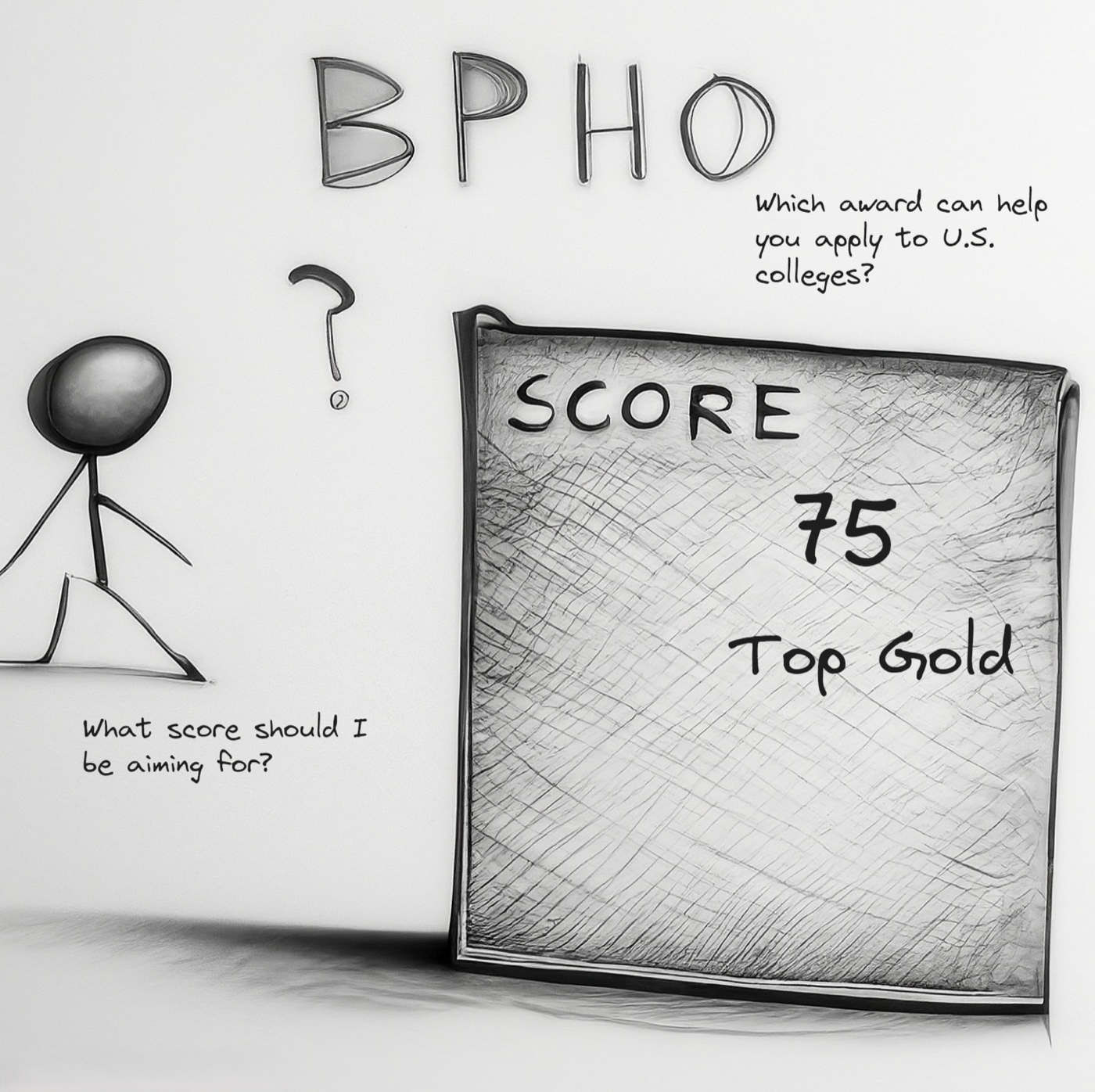
The question every entrant asks: what score do I actually need? Score 75 earns Top Gold — the tier most recognized in US college applications.
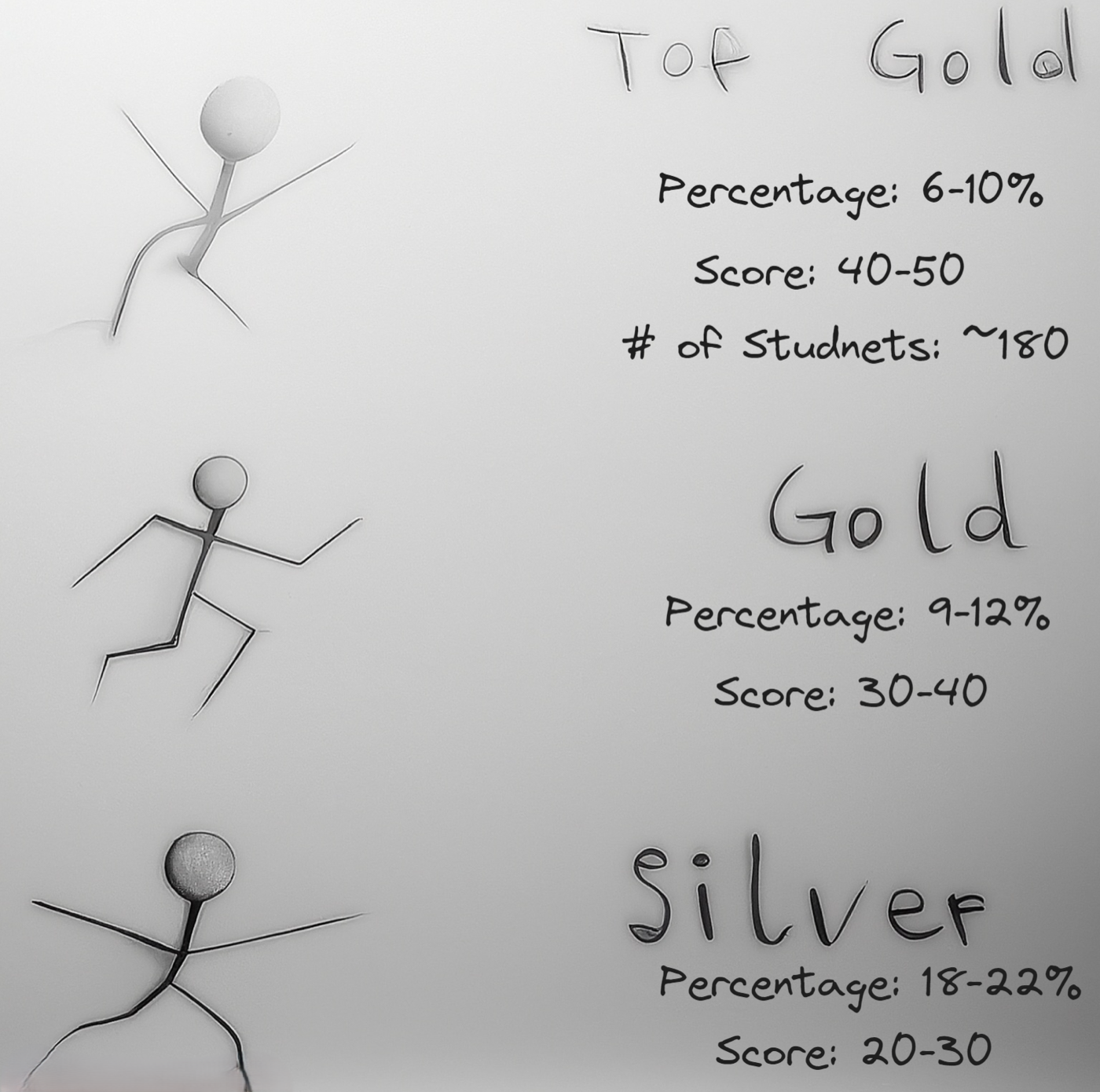
The award tiers in full. Top Gold: top 6–10%, scores 40–50, roughly 180 students. Gold: 9–12%, scores 30–40. Silver: 18–22%, scores 20–30.
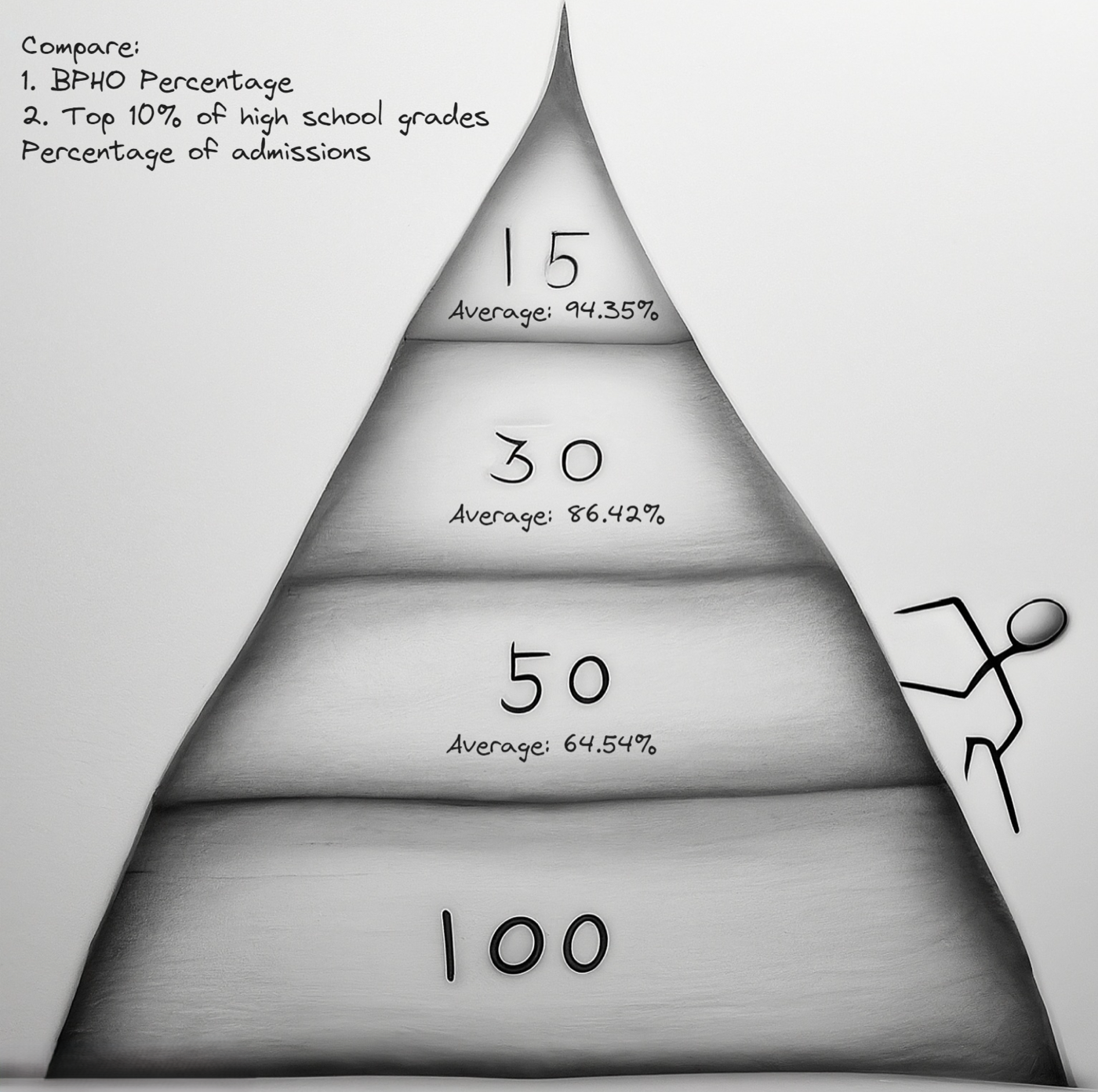
A score pyramid mapping BPhO percentile rank against historical admissions averages: score 15 (avg 94.35%), score 30 (86.42%), score 50 (64.54%).
Four panels on how to reach the International Science and Engineering Fair: finding your regional fair, presenting at county level, advancing through state, and understanding the routes available to students who studied in China. Unofficial guide; ISEF is a program of the Society for Science.
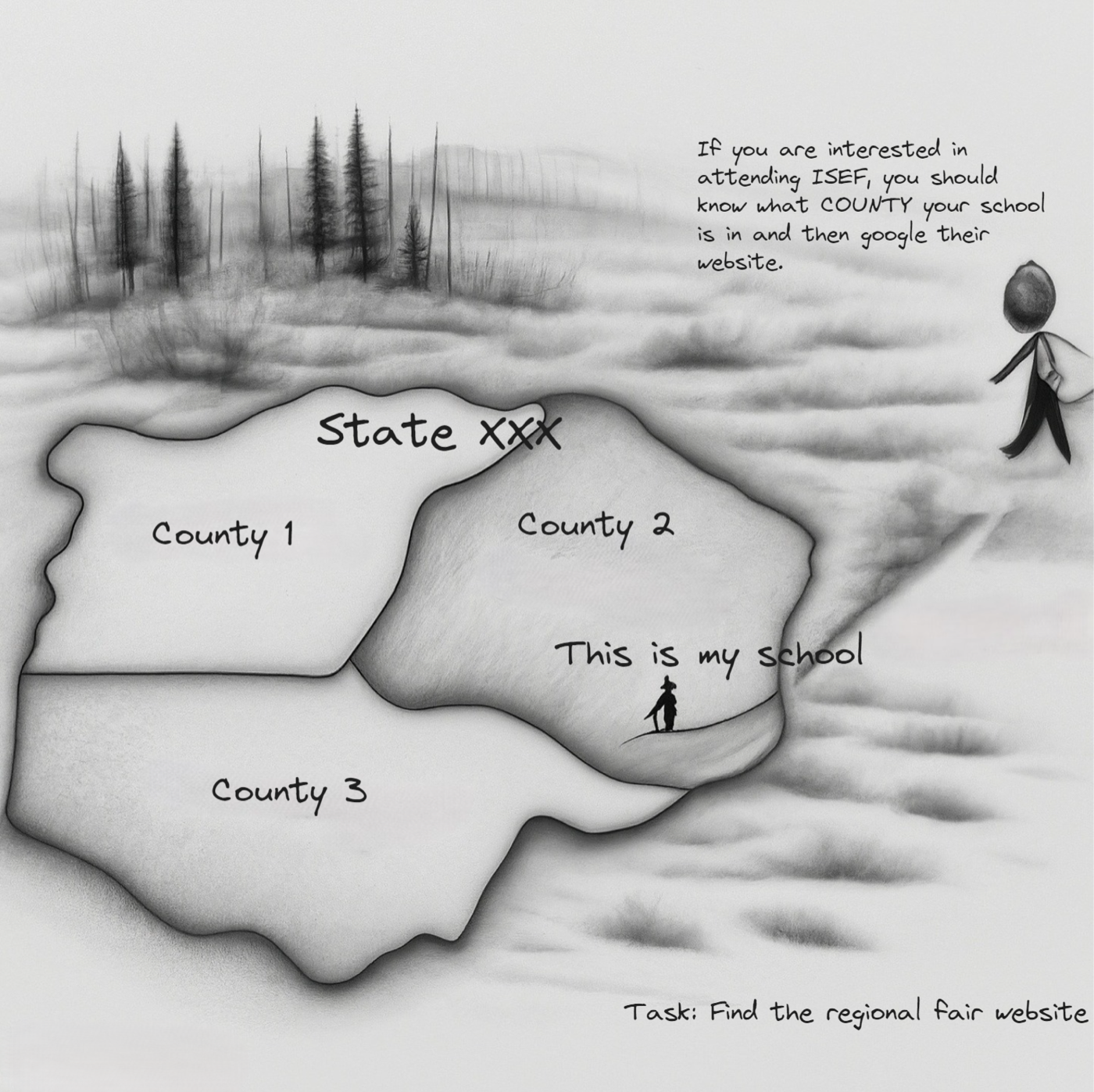
Step one is geographic. Find the county your school sits in, then locate that county's affiliated regional fair website.
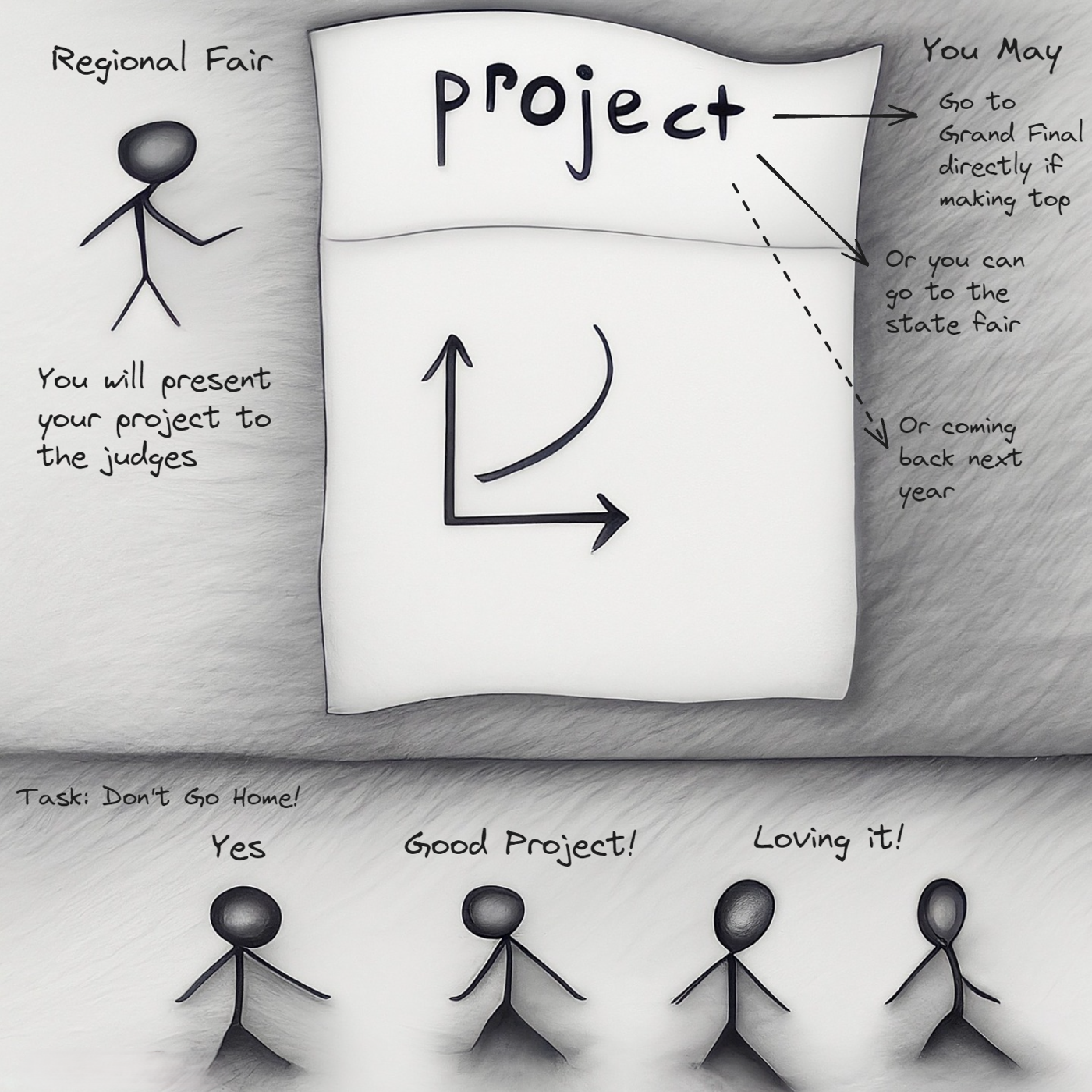
At the regional fair you present your project to judges. Top performers may advance to the state fair, or — in rare cases — directly to the Grand Final.
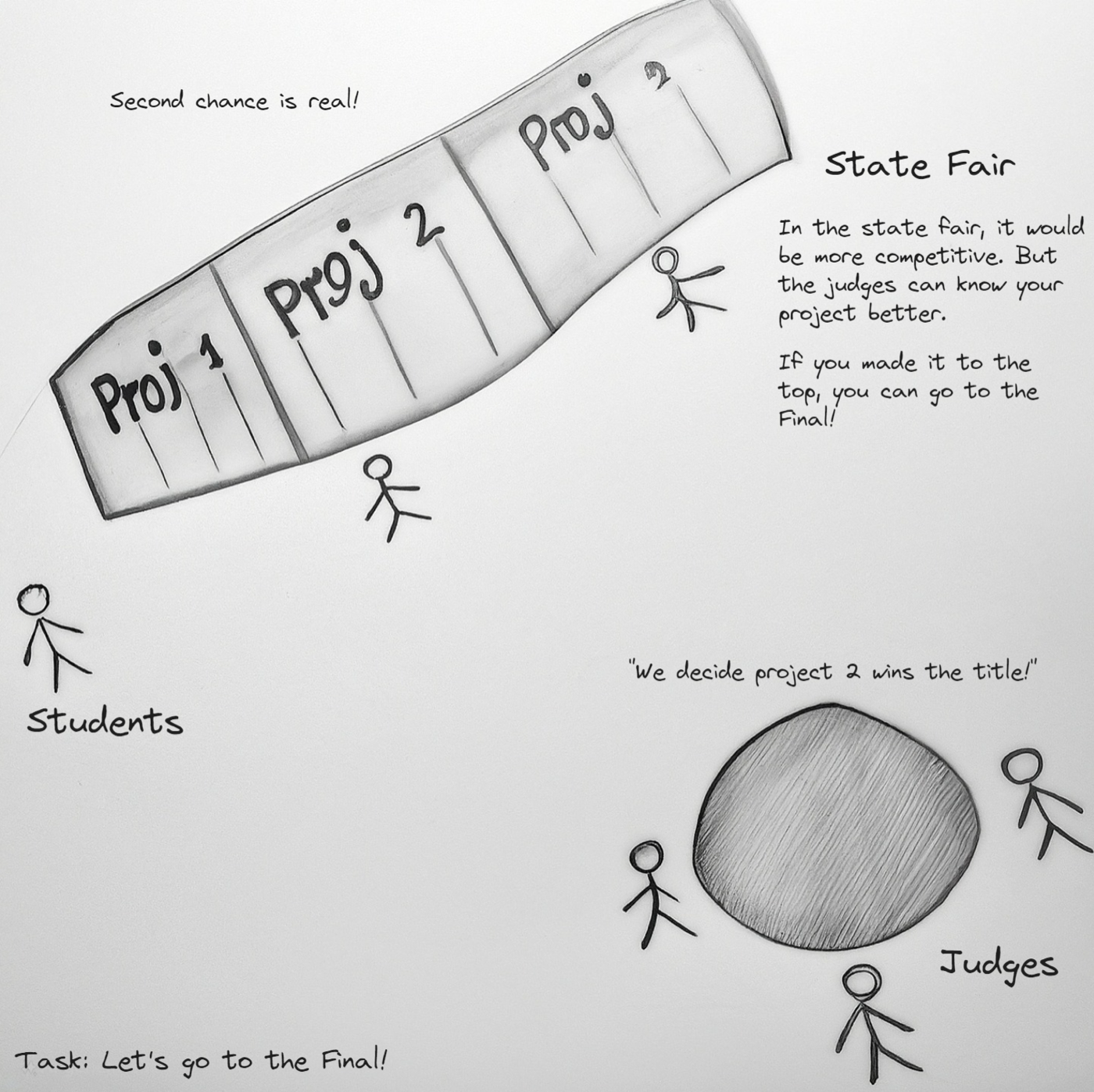
State fairs give you a second chance. The field is more competitive, but judges have time to engage seriously with your work. Top projects advance to ISEF.
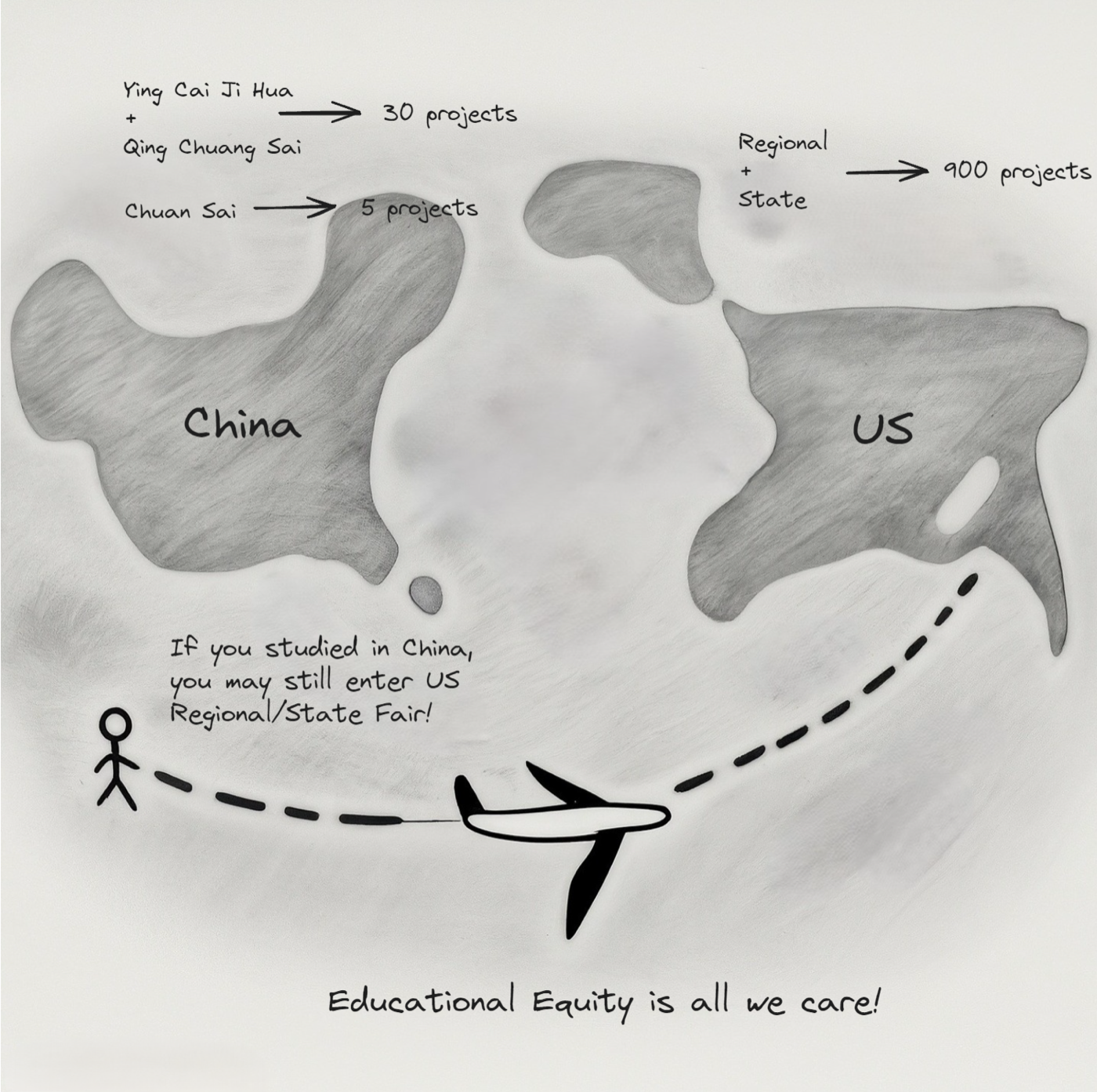
Access routes from China: Ying Cai Ji Hua and Qing Chuang Sai together send roughly 30 projects; Chuan Sai sends five. Students who studied in China may still qualify through US regional fairs.
Unofficial; not affiliated with or endorsed by the British Physics Olympiad, the Society for Science (ISEF), or any affiliated organization. Analyses and illustrated commentary are original work by Tian2; original exam scoring frameworks, award criteria, and fair structures remain © their respective owners.