
iGEM Paris Day 3 — Leading the Judge Panel
IGEM-Paris-Day3-Leading Judge
Today's judging session ended — three panels again. With four online judges, two in-person, and one local PhD student in our group, the responsibility of holding the room together fell to me. It turned out to be a straightforward matter of opening, welcoming the teams, offering congratulations, and facilitating questions — but there was something genuinely enjoyable about exercising a little leadership, even at a small scale.
Here is a summary of what I learned from several days of judging, and what I think is worth keeping in mind.
1. How the Awards Work
The award structure is very clear: judges evaluate projects across multiple dimensions, and for the Gold/Silver/Bronze medals, the determination is binary — Yes or No for each criterion.
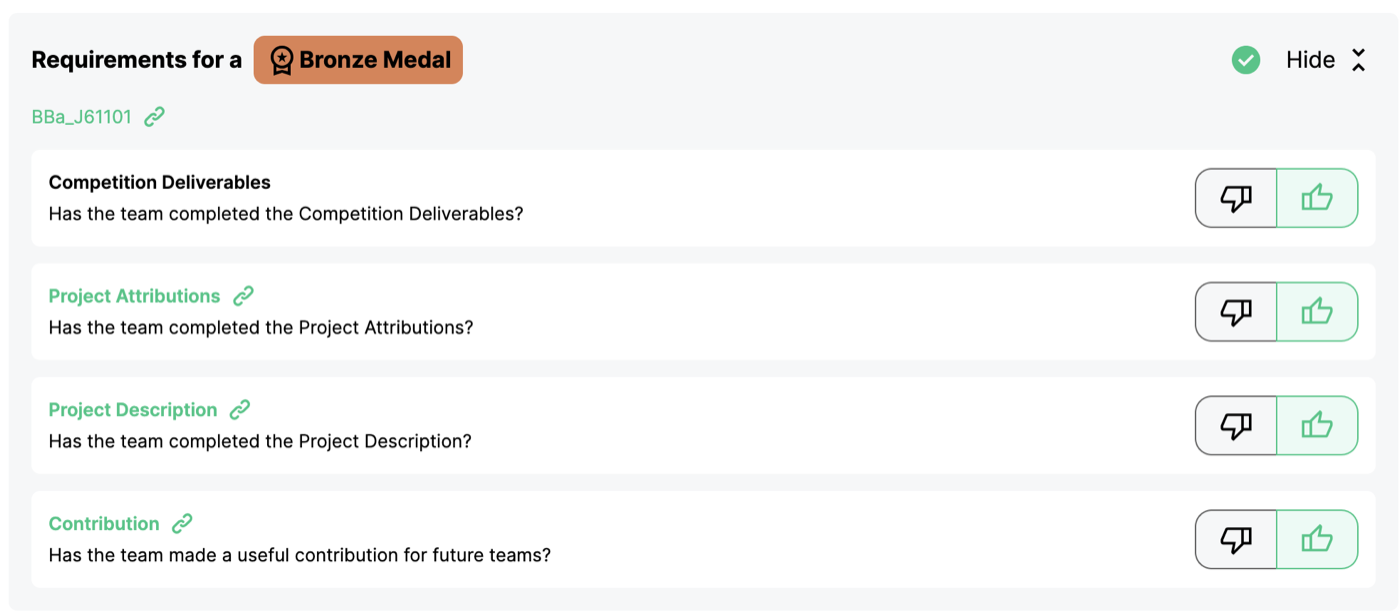
Special awards work differently, with their own questions and tiers. Scores are then aggregated to determine medal levels and individual prizes.
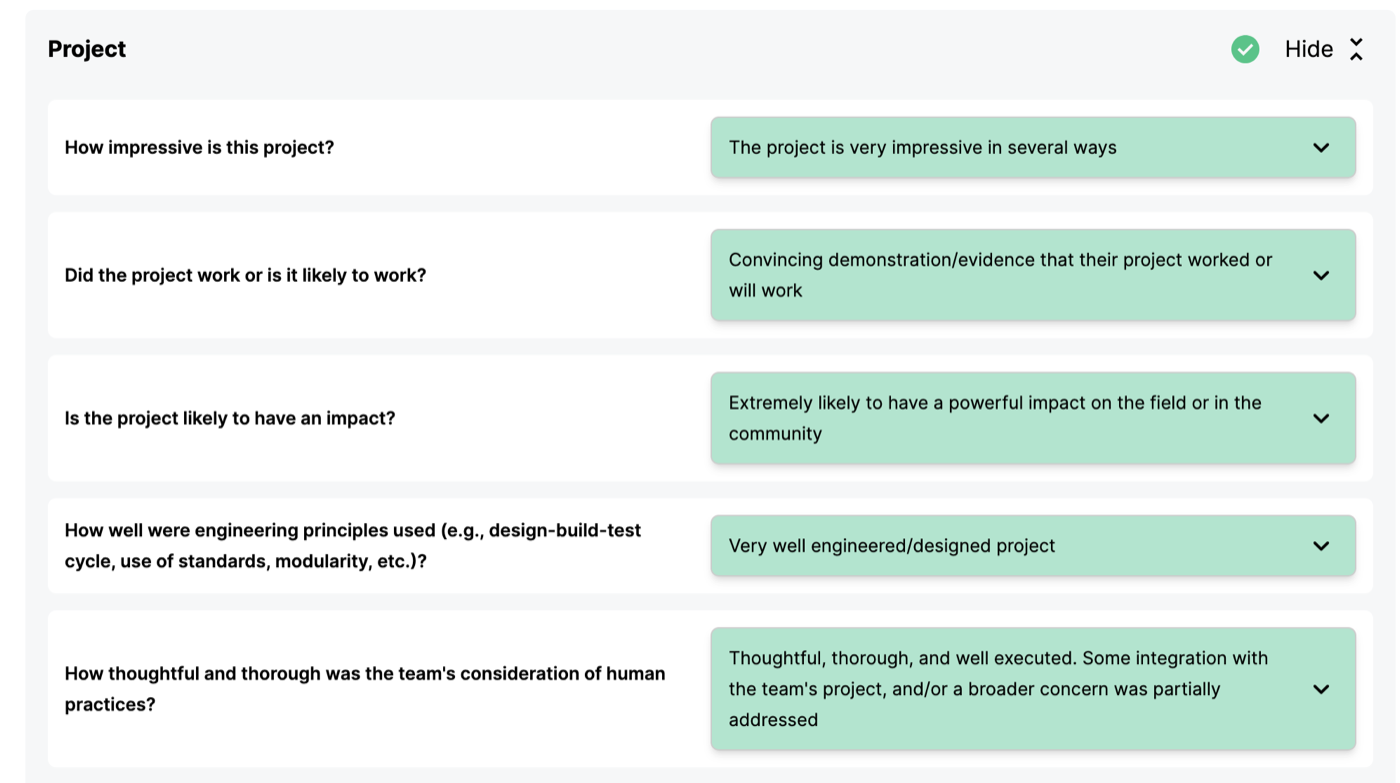
The takeaway: winning at iGEM is quite achievable. The criteria are explicit, past-winning projects are publicly available for reference, and if you meet the requirements, you receive the award. Compared to competitions where outcomes are influenced by black-box decisions, relationship dynamics, or opaque regional politics, iGEM's judging process is genuinely transparent.
2. Choose Your Team and Guidance Carefully
As a student, it is hard to know from the inside whether a project is strong. This makes the choice of coach and institution critical — from topic selection to process management to wiki construction. Most of this infrastructure is provided by training organizations, and some established ones have ongoing relationships with iGEM's organizers, which provides a degree of quality assurance. The short version: awards are accessible, but you need reliable guidance. There have been cases of large-scale academic integrity violations that led to score invalidations.
Beyond guidance, team composition matters enormously. Spending time at a large-scale event like this changed my earlier idealism about working with any student regardless of disposition. Screen carefully. Build deliberately.
3. The Wiki Is Everything
After the judging sessions, I can say with confidence: the presentation counts for perhaps 10% of the outcome, possibly less. Judges spend significant time reviewing the wiki before the in-person session, and virtually all evaluation criteria draw directly from it. Keep this in mind:
- Keep it simple and direct. Elaborate JavaScript animations may feel impressive to build, but judges do not have time to play with them. Clarity wins.
- Tell the story end to end. The wiki should read as a coherent narrative from problem to conclusion, anticipating the judges' likely questions and addressing the project's hard points proactively.
- Design matters. Image sizing, table layout, font choices — these all affect how a page reads. Do not dump data and figures without thought for presentation.
- Special awards require differentiation. Make the case clearly for what sets your project apart. Vague claims do not earn special prizes.
- The Jamboree is a celebration, not a competition. The on-site event is largely a party — a very expensive one (€650 per ticket) — and the judging is mostly complete before you board the plane.
4. On the Presentation
Still worth preparing well. Roughly 90% of judges' questions are predictable. For the remaining 10%, admitting you don't know and describing how you would find out is a perfectly good answer — no one holds it against you. Post-session debriefs focus almost entirely on inconsistencies or unclear logic in the wiki, not on the Q&A itself.
Final Thoughts
iGEM is probably the competition best aligned with what US university applications look for: genuine depth in synthetic biology, the integration of research and product thinking, meaningful teamwork, and community engagement. The entry bar is relatively low and the experience is genuinely formative. The competition's biggest structural weaknesses are large team sizes (which concentrate free-riding) and the overwhelming proportion of Chinese participants at the final, which raises long-term questions about the competition's breadth and credibility.
Disclaimer: this is my first iGEM as a judge. All of the above is personal observation and may be incomplete.