
ISEF Finals — What Judges Actually Ask
ISEF总决赛评委问题汇总与提问逻辑
The interview structure at ISEF finals is fifteen minutes per student. Ten to twelve of those are the formal interview; the rest is transition and setup. In practice, sessions routinely run longer. How a judge uses those minutes depends almost entirely on how well they know the project going in.
Three interview modes
From the judge's side, there are three ways the session opens — and students who recognise which mode they are in can adjust in real time.
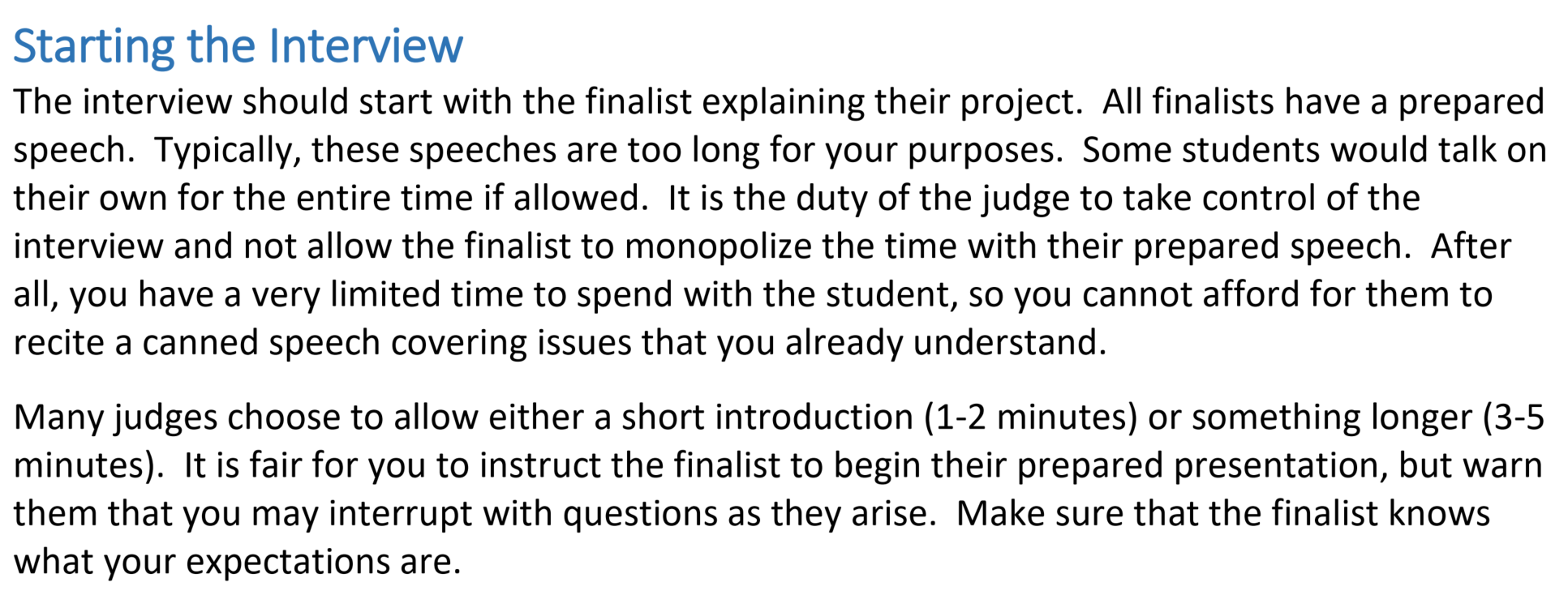
- Mode 1 — Full presentation first. The judge asks for a five-to-eight-minute overview before asking anything. This typically means the judge is less familiar with the field and wants to understand the project before probing it. Do not rush this presentation; it sets the frame for everything that follows.
- Mode 2 — Interrupted presentation. The judge lets the student begin and then breaks in with questions as they arise. This means the judge is engaged and forming live hypotheses. Answer each interruption cleanly, then resume.
- Mode 3 — Direct questions from the start. The judge bypasses the presentation and asks specific questions immediately. This is a good sign: it means the judge has studied the project and wants to test specific things. A student who encounters this mode should not be alarmed — it usually signals serious interest.
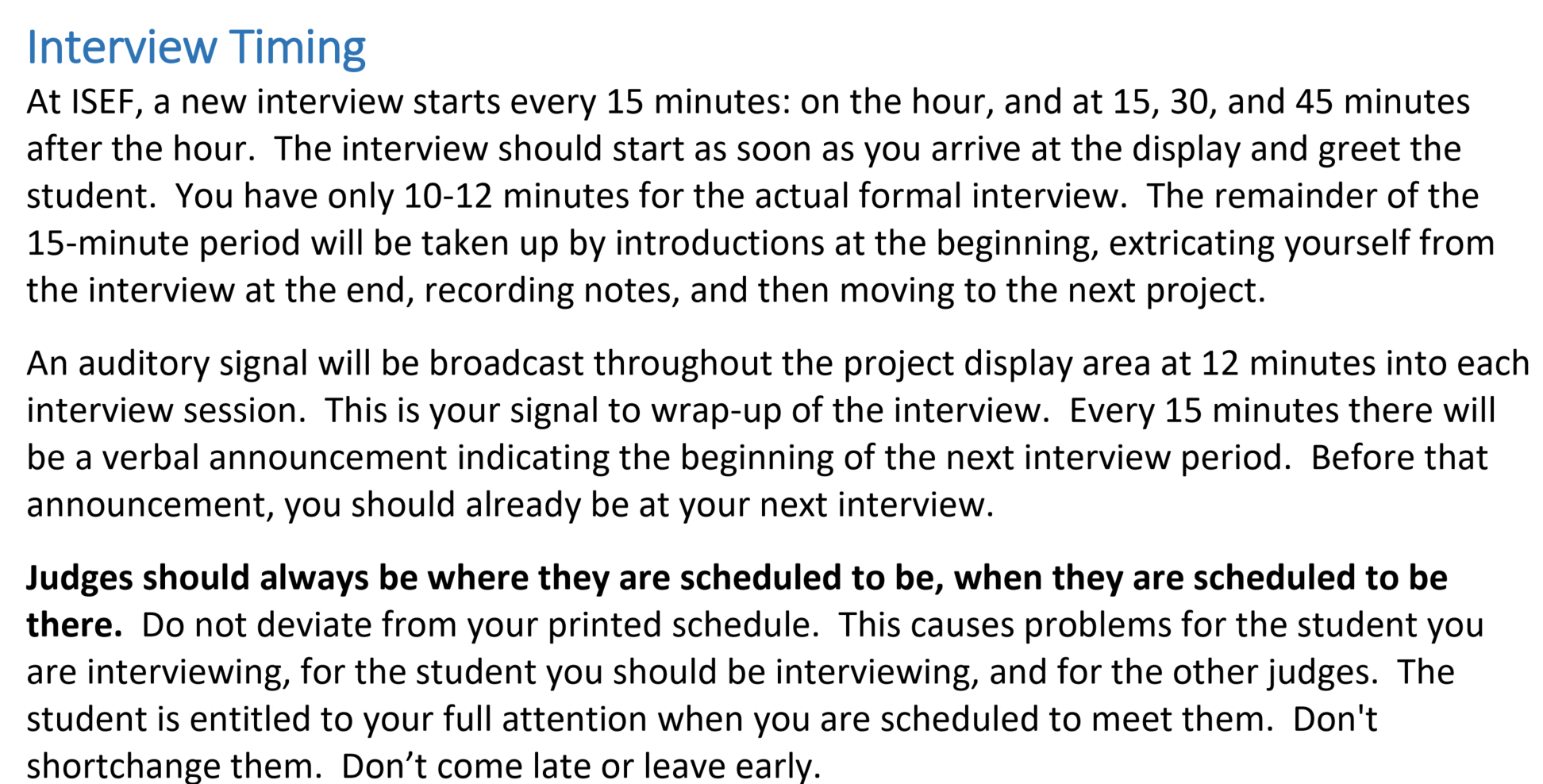
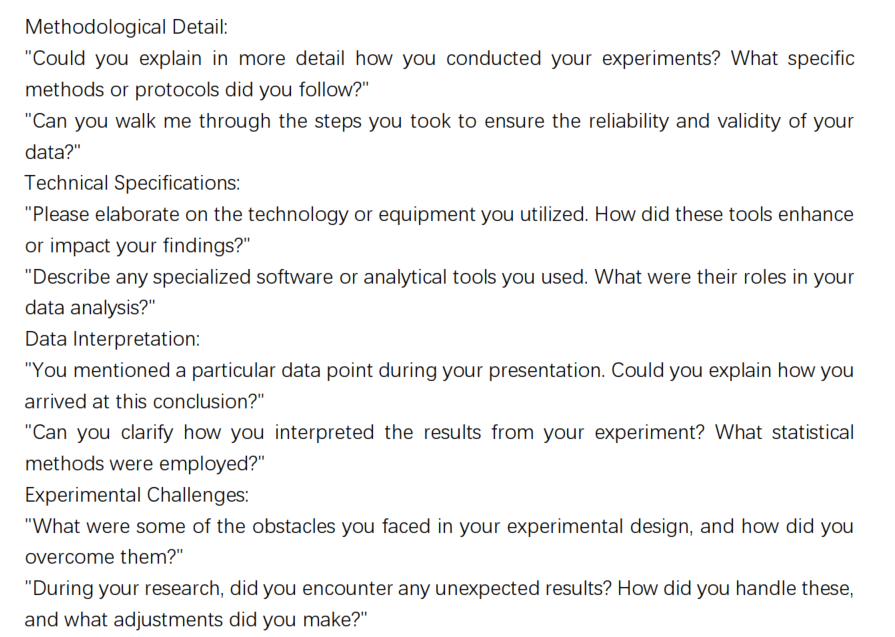
Official ISEF judge interview structure document
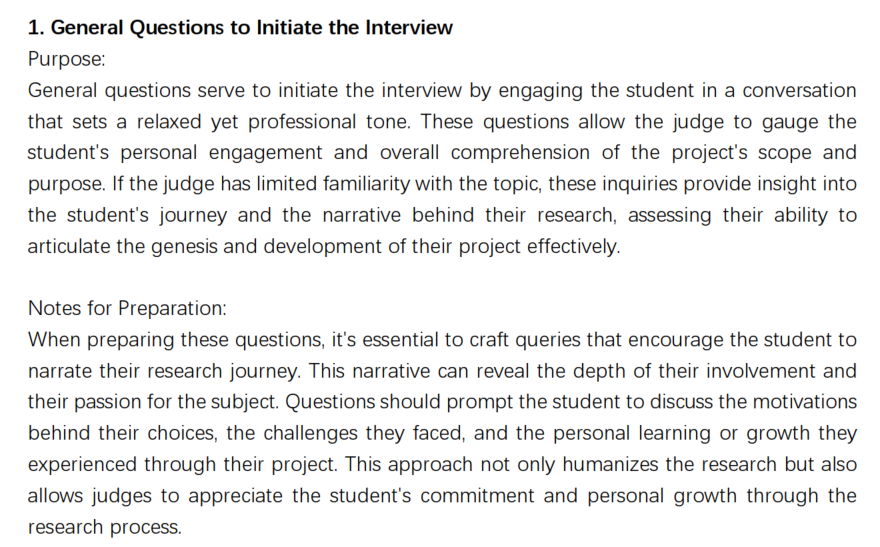
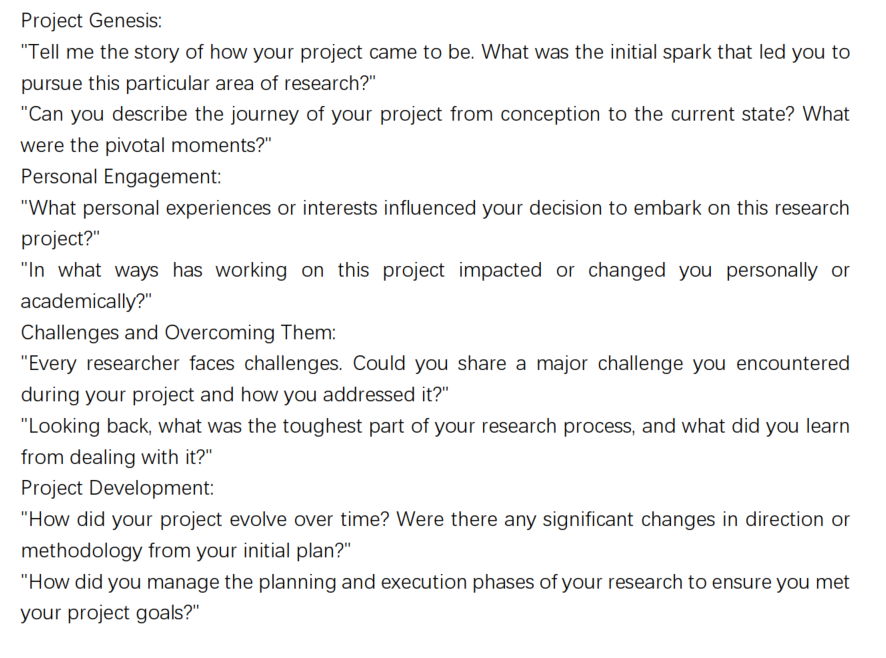
Category 1 — Background and motivation questions
These questions are the most common opening, regardless of mode. Judges ask them for three reasons: they are easy to answer and break the ice; they allow a judge who is out of their field to evaluate the student on something other than technical depth; and they reveal whether the student has genuine ownership of the project's intellectual history.
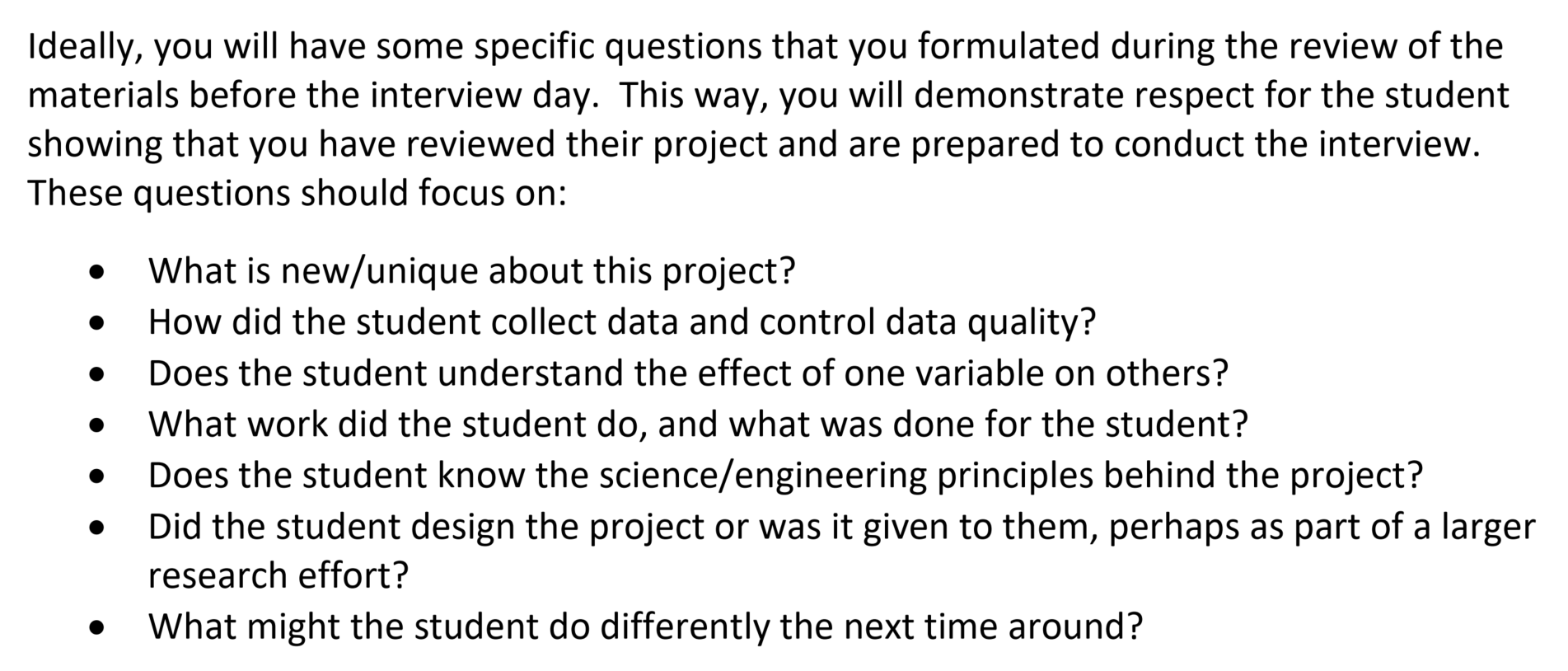
Typical questions: Why this topic? What problem were you trying to solve? What did you know about this area before you started? What has changed in your understanding? These should be answered fluently and without hesitation — practise them until they feel like breathing.
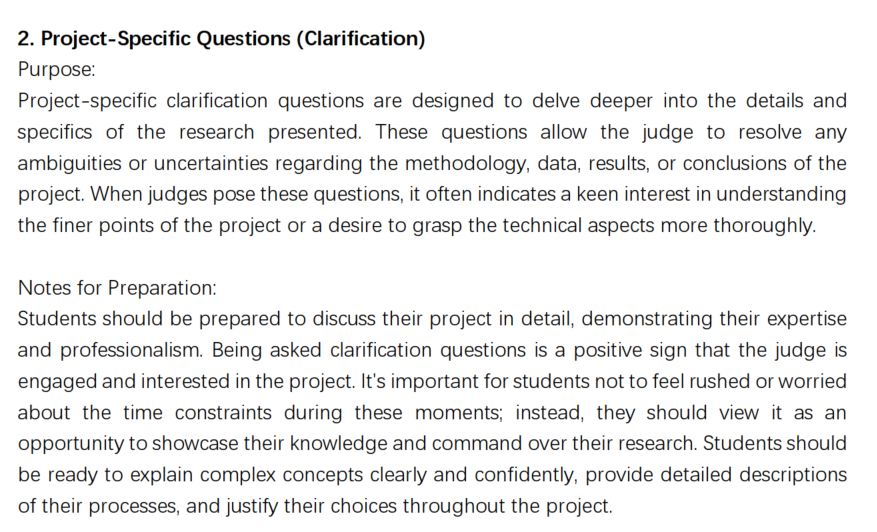
Category 2 — Project-specific technical questions
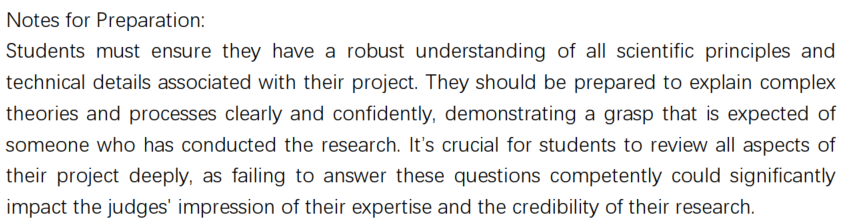
These are the questions the judge formed from reading the project materials in advance, or the ones that arose while listening to the presentation. They cannot be fully predicted, but the preparation strategy is systematic: read your own project from a sceptical outsider's perspective, list every decision that required a choice between alternatives, and rehearse a defence of each.
The most important thing to know about this category: a direct, honest "I don't know — but here is how I would find out" is more impressive than a confident-sounding wrong answer. Judges at ISEF are practising scientists. They ask questions they know the answer to. They will notice the bluff.
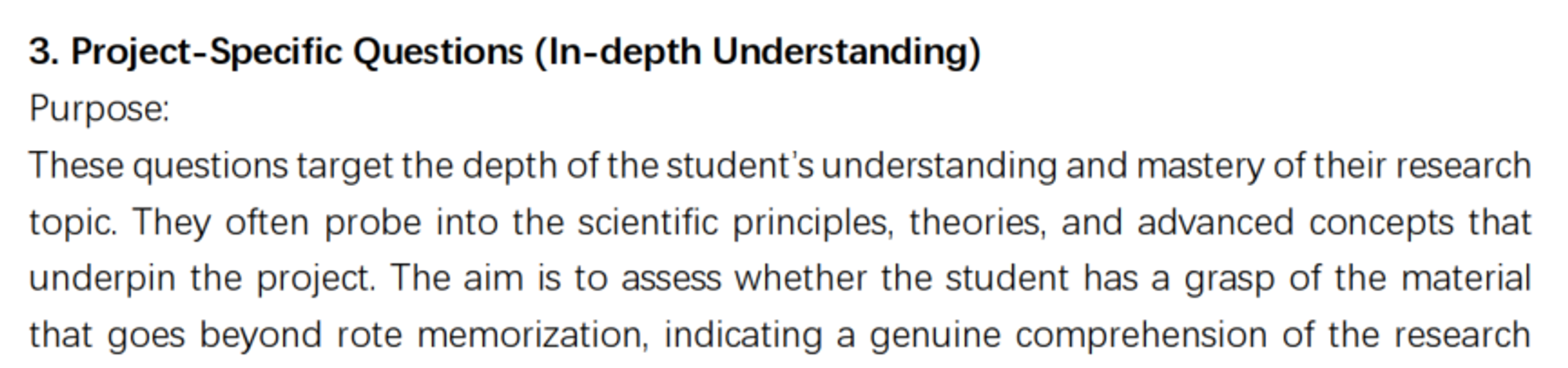
Category 3 — Ownership verification questions
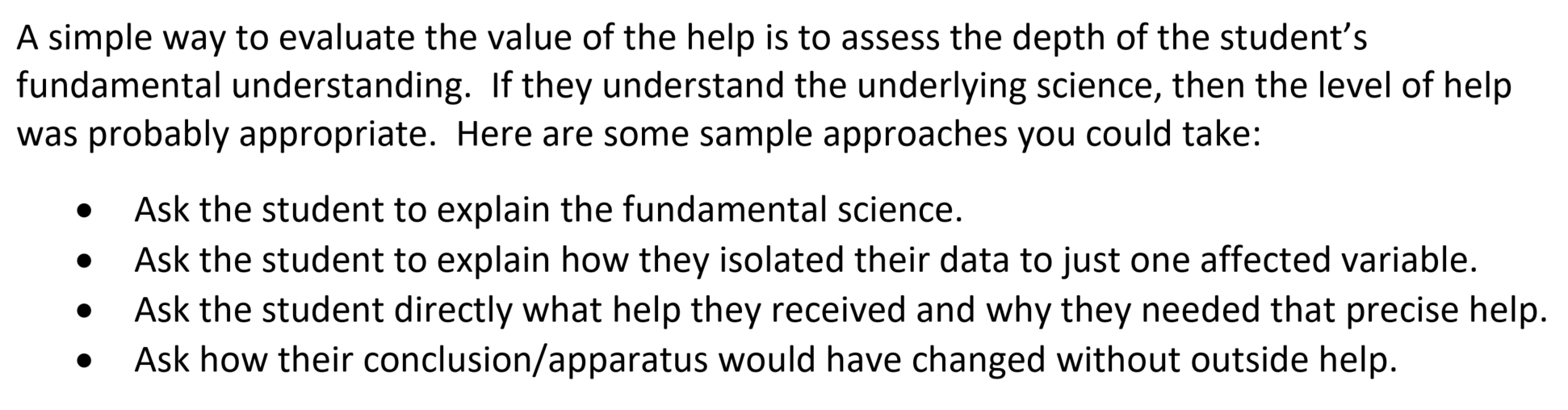
Because ISEF projects are often highly specialised and sometimes involve faculty mentors, judges actively probe whether the student understands their own work at a foundational level. These questions are designed to distinguish students who drove their research from students who executed someone else's plan.
A theoretical physics project on elementary particles was nominated for first place. One judge asked a basic question about hydrogen energy levels. The student's answer was unsatisfactory. The project dropped to fourth. Know your field beyond your project.
Supplementary question types
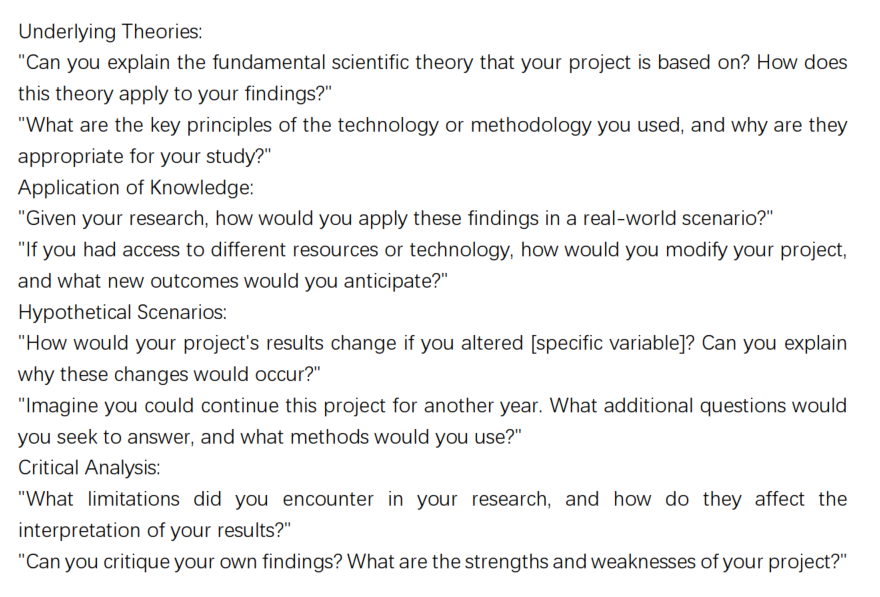
Less common but worth preparing: questions about the assumptions your study rests on; questions about what you tried that did not work; team contribution questions (who did what, and how do you know); and "what would you do next?" — which tests whether you have a research programme in mind or just a completed project.