
Let me walk through the ISEF US pathway in plain language — the key stages, what happens at each one, and the specific considerations for students outside the US who want to use this route.
Before You Start: Two Key Facts
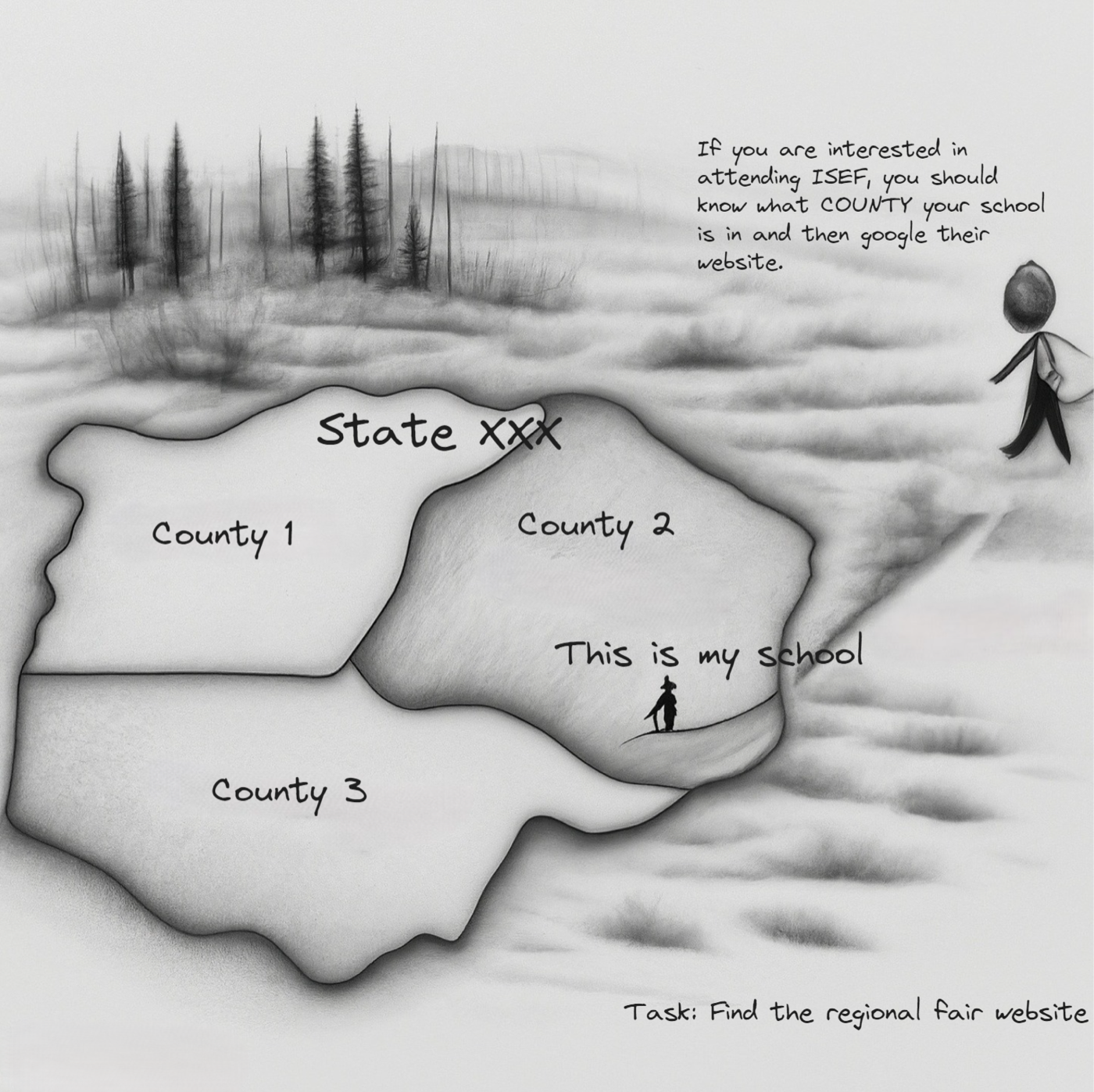
ISEF (the International Science and Engineering Fair) is the largest and most prestigious science competition in the world. Most participants are in 10th or 11th grade. Before doing anything else, a US-pathway student needs to know two things: their State and their County. Everything else flows from those.
Step 1 — Regional Fair
To qualify for ISEF Finals, US students must first compete at their county's regional science fair. If you do not know which fair covers your county, ask your school's science department, or contact me. Schools typically need to register with the regional organizer in advance.
Step 2 — Three Outcomes at Regionals
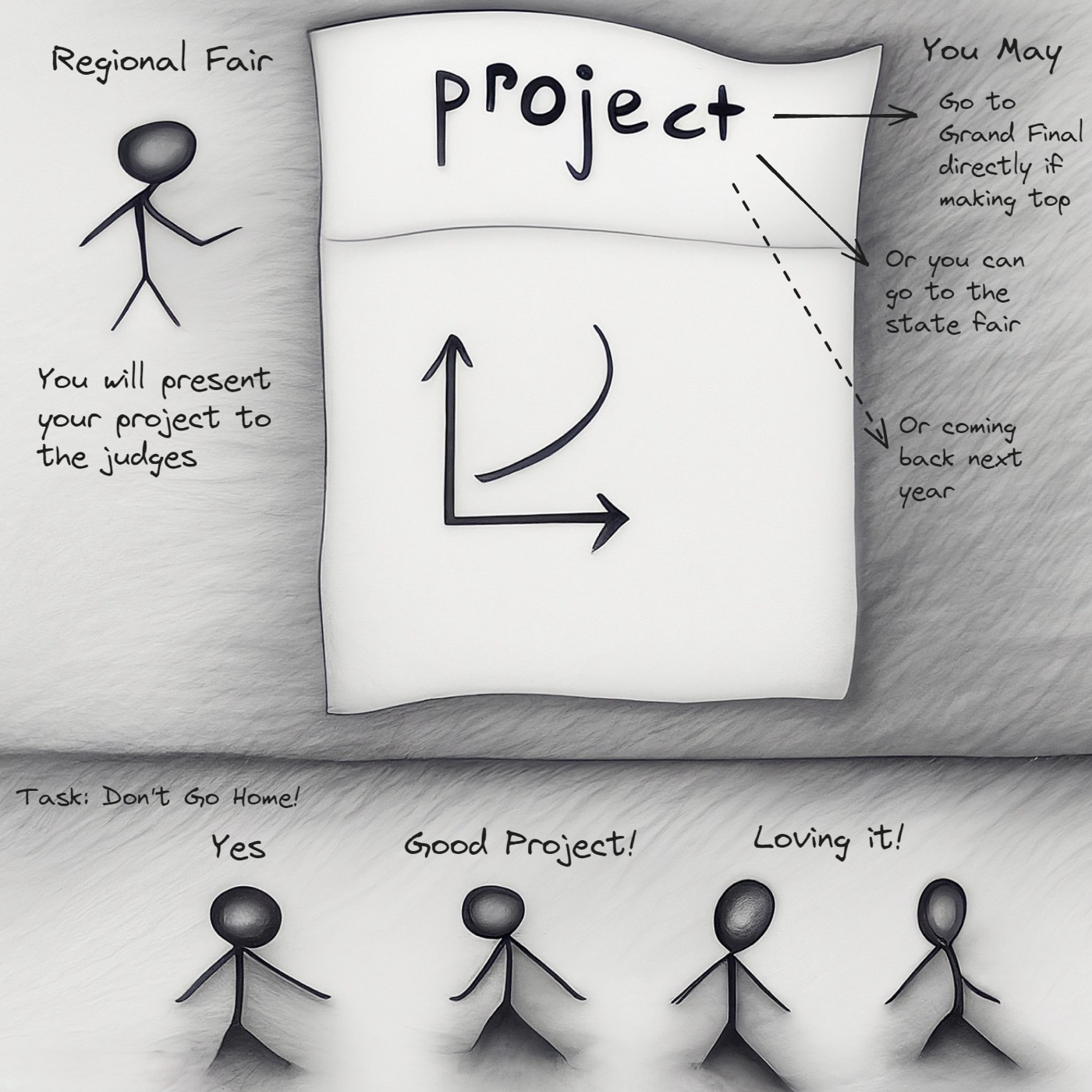
Performance at the regional fair determines what happens next:
- Top performers advance directly to ISEF Finals. The number of direct-advance slots varies by region — contact me for specifics on a given fair.
- Strong performers who do not advance directly can compete at their State fair for a second chance.
- Others are eliminated at this stage.
Step 3 — State Fair (if applicable)
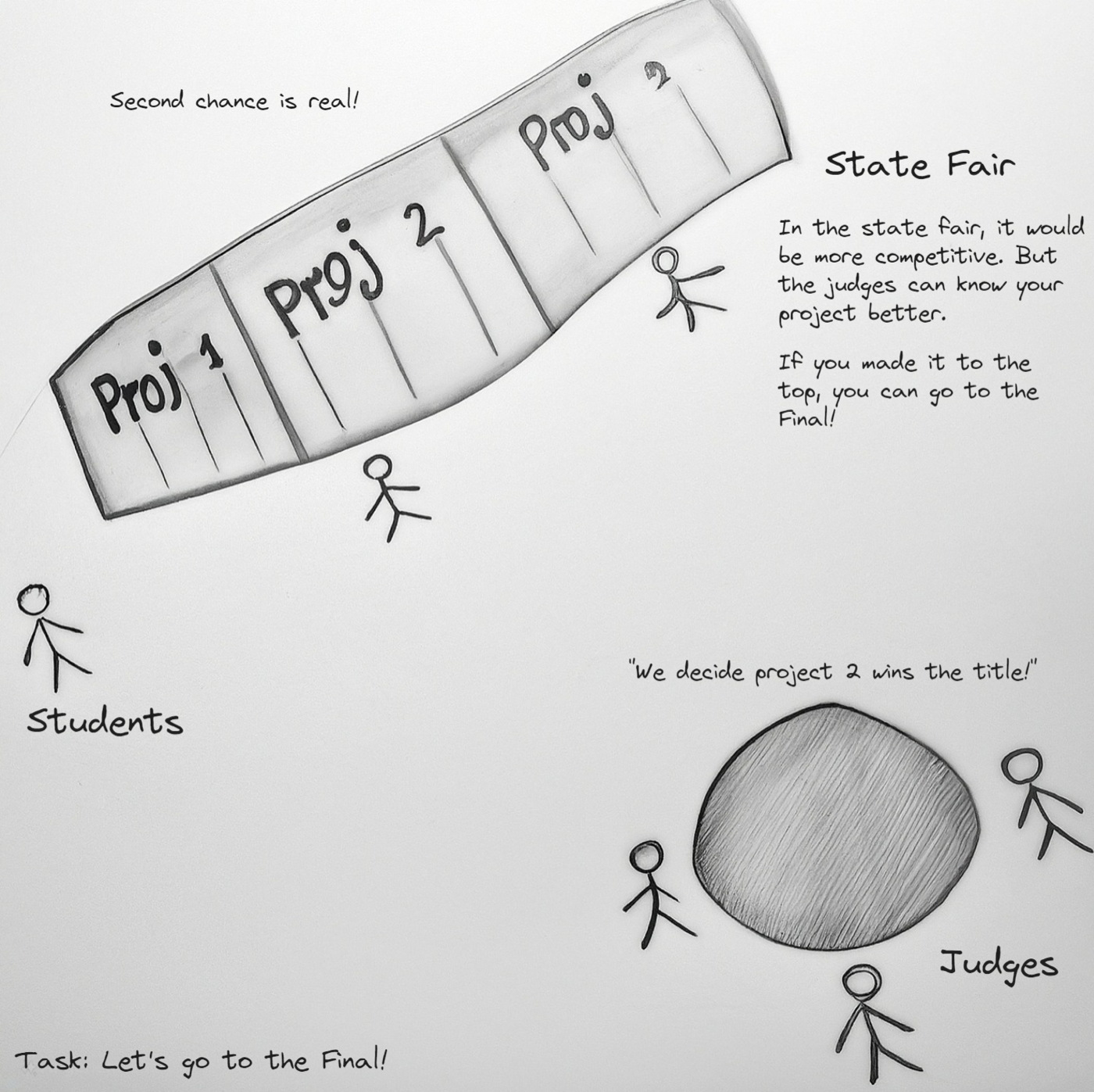
If a student reaches the State fair, they get a second shot at qualifying for ISEF Finals — and State fairs typically offer more qualifying slots than regionals. There is also a secondary benefit: many state universities offer scholarships specifically to state-fair award winners.
Why Go Through the US Route?
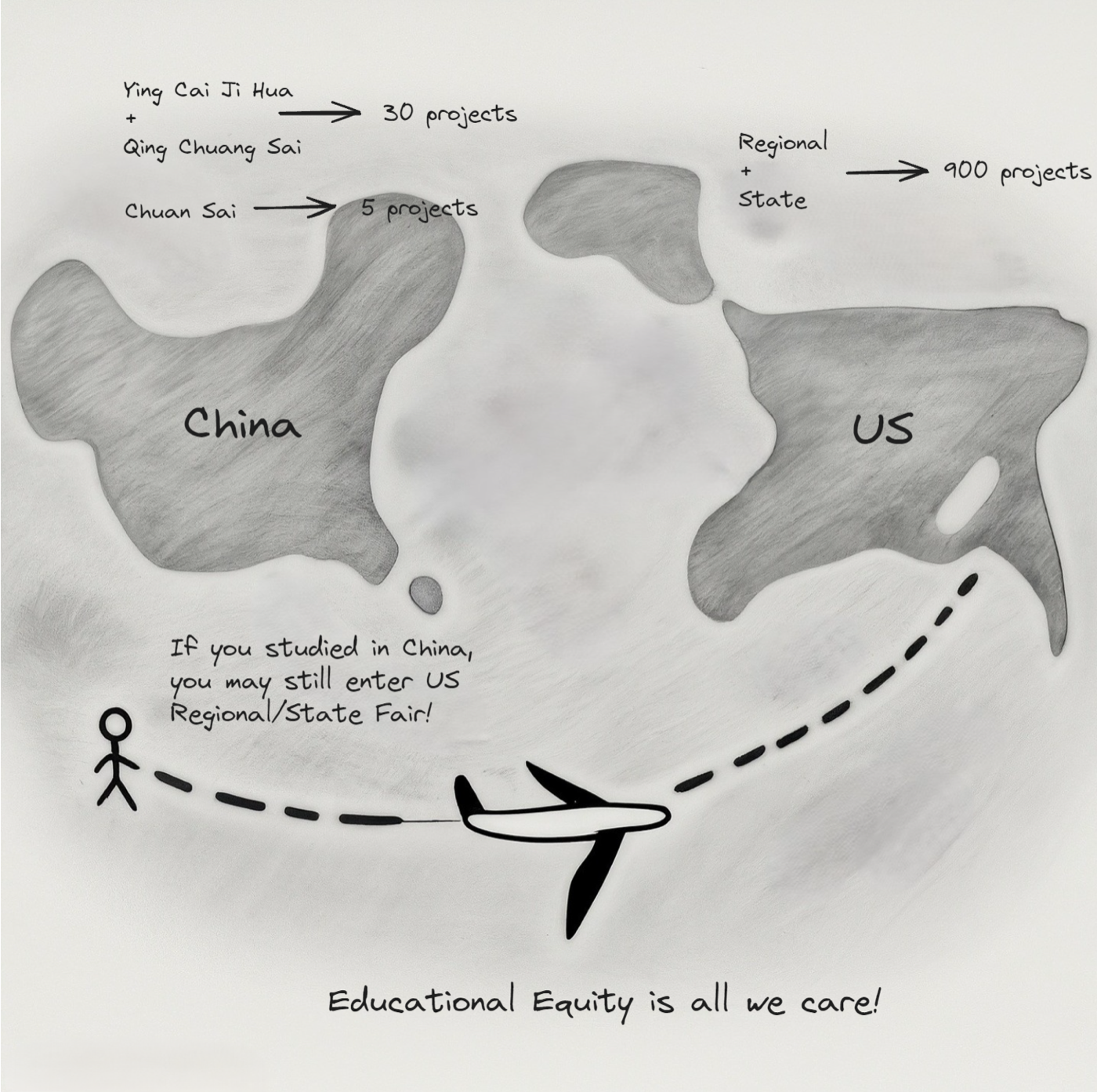
For students outside the US who want to compete at ISEF Finals, entering via a US regional fair is worth considering seriously. The domestic China pathway allocates approximately 35 slots total. The US regional + state pathway, summed across all regions, offers roughly 900 qualifying slots. The path is more open, more transparent, and avoids the layer of domestic intermediaries whose incentives do not always align with student outcomes.
We can assist with registration, project coaching, and materials review for students using this route. Feel free to reach out directly.